_lg.webp)
Dive Sites
Sinai Dive sites
Welcome to one of the world's most legendary diving destinations. Sharm el-Sheikh is not just a resort town — it is the gateway to an underwater paradise that has been captivating divers for decades.
At the southern tip of the Sinai Peninsula lies Ras Mohamed National Park, Egypt's first protected marine area and home to some of the most spectacular reef systems on Earth. Here, dramatic drop-offs, thriving coral gardens, and encounters with pelagic species create the kind of dives that divers remember for a lifetime.
To the north, the Strait of Tiran offers a different kind of thrill. Its four iconic reefs — Jackson, Woodhouse, Thomas, and Gordon — are world-renowned for drift diving, strong currents, and the abundance of large marine life that gathers in these nutrient-rich waters. This is where adventure meets the open sea.
And then there is the crown jewel of wreck diving: the SS Thistlegorm. Sunk in 1941 during World War II, this British merchant vessel rests on the sandy floor of the Red Sea and is widely considered one of the most famous wreck dives on the planet. Her cargo of trucks, motorcycles, and wartime supplies remains remarkably intact, offering a hauntingly beautiful time capsule beneath the waves.
From the vibrant reefs of Ras Mohamed to the adrenaline-filled channels of Tiran and the historic depths of the Thistlegorm, Sharm el-Sheikh offers an unrivaled diversity of underwater experiences. Whether you are a novice taking your first breaths underwater or a seasoned technical diver, these waters promise encounters that will stay with you long after you surface.
.jpg_lg.webp)
Stella di Mare House Reef
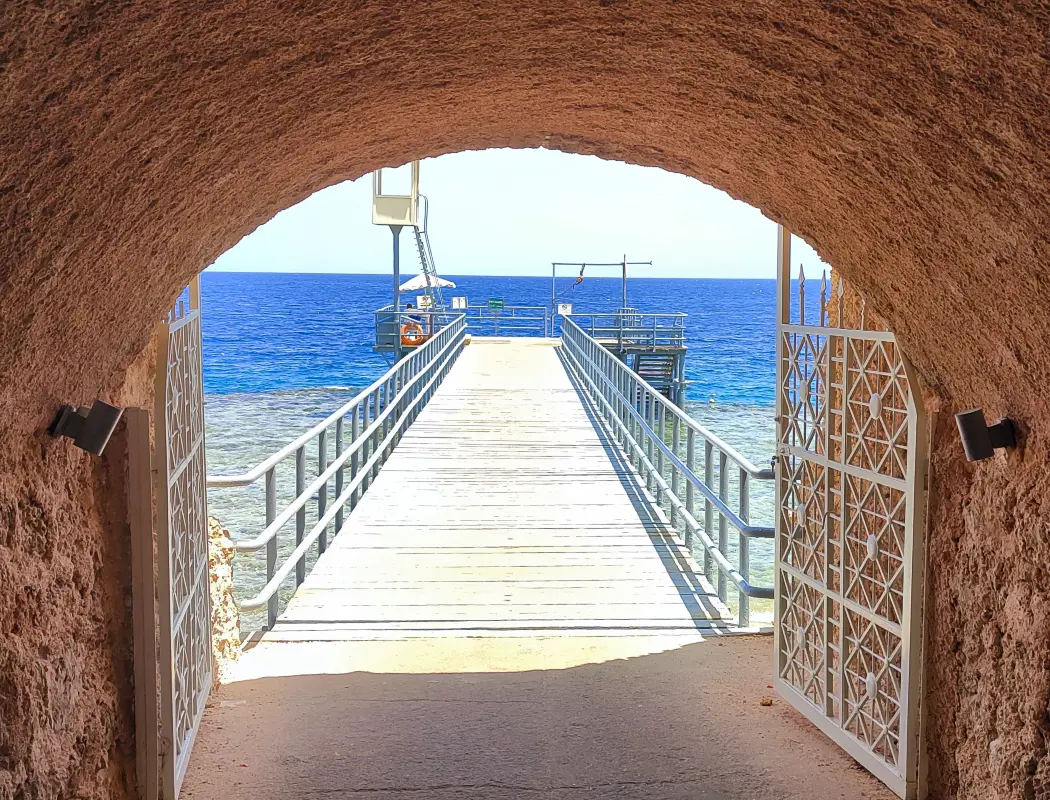
shore dive, guided or unguided only in buddy system
Step straight from the shore into a living underwater world. The house reef is your front-row seat to the Red Sea’s magic — no boat rides, no long briefings, just instant access to vibrant coral wall and curious marine life.
Perfect for relaxed dives, training sessions, orientation and check dives this reef offers something new every time you enter the water.
This dive site gets it’s name from the old amphoras remains that can be found here. It is an easy dive with a sandy plateau, pinnacles, and coral blocks.
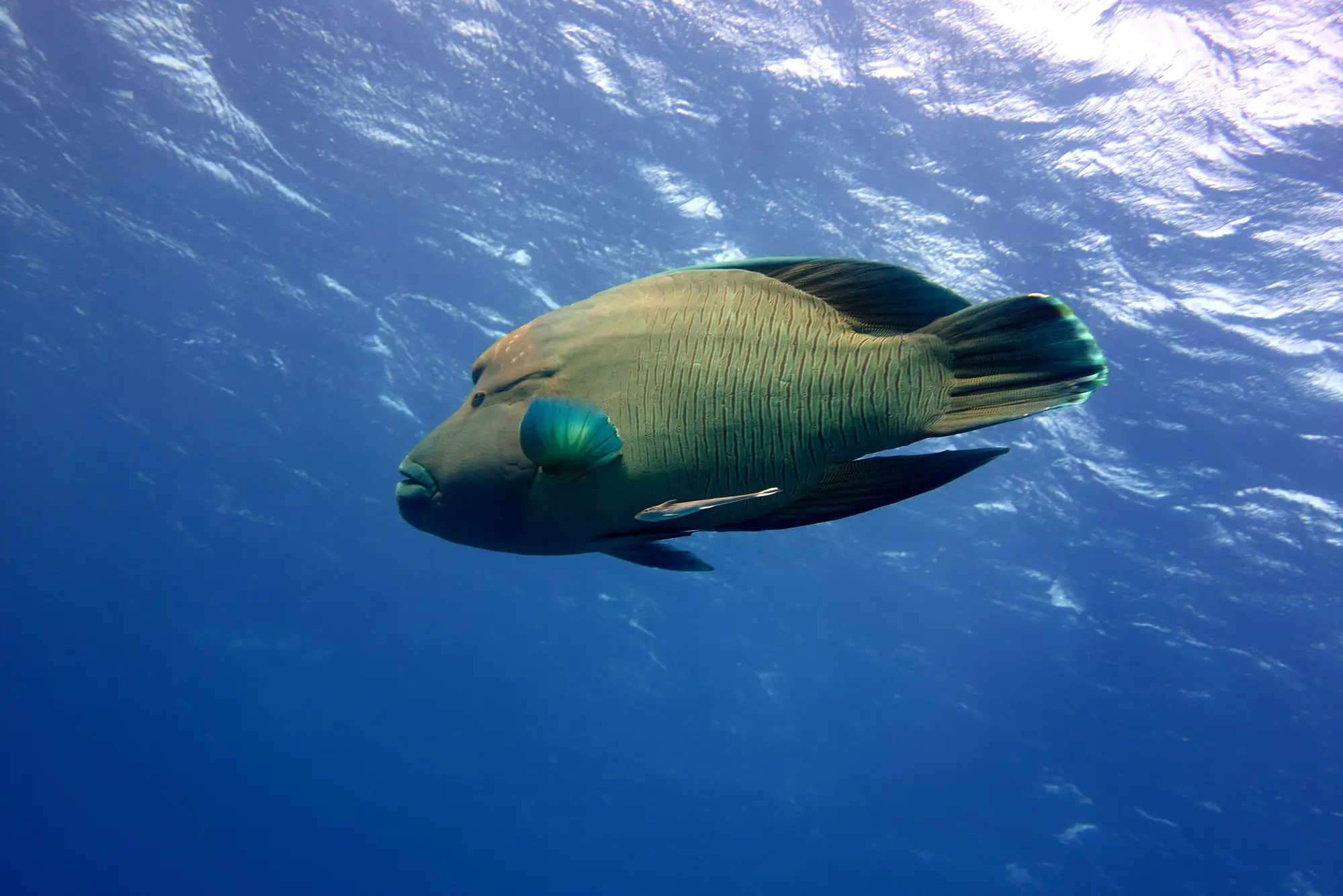
Apart from the table corals, you will find many kinds of shrimp, glassfish, and hawkfish in the gorgonians, as well as napoleon wrasse and lots of rays.
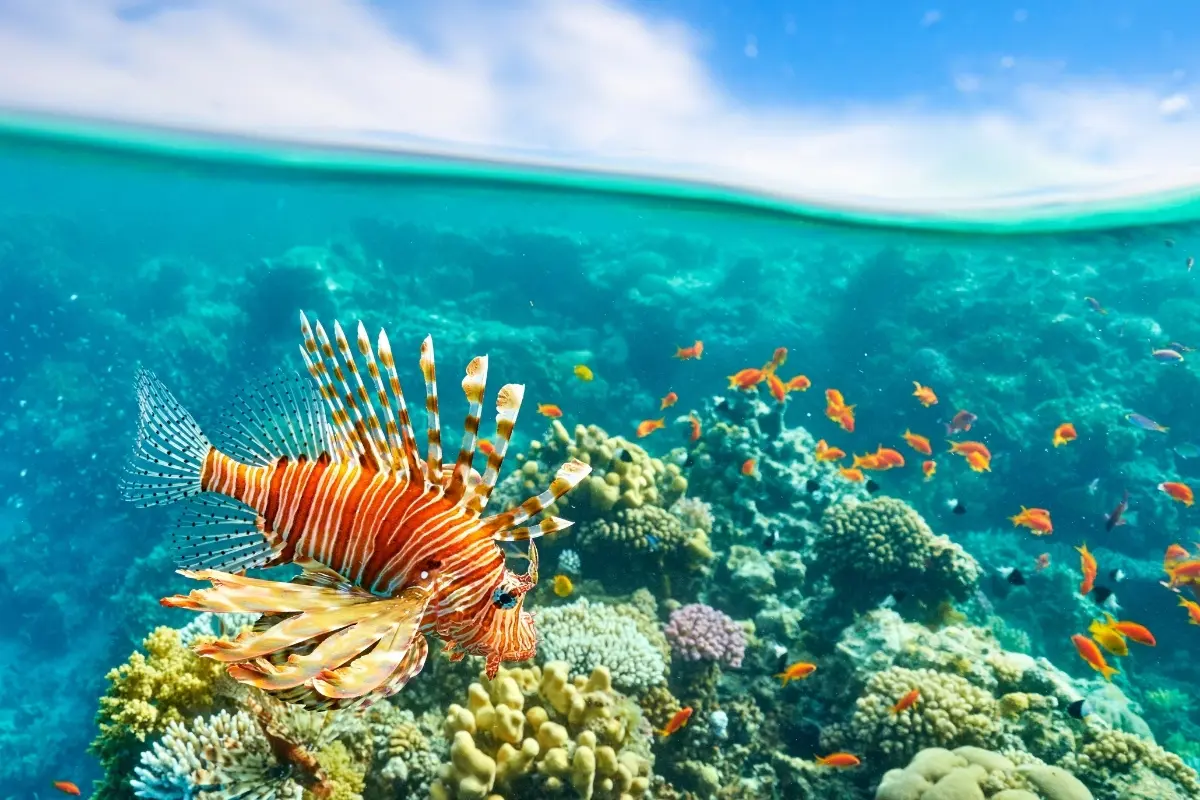
This site is suitable for advanced divers. You can access this site by boat or you can get to it by swimming through a hole in the reef to access it from the shore. This dive is home to a beautiful wall covered with soft corals and many shelters. Currents can sometimes be a bit tricky here.
Many shelters and small caves can be found here. There are scorpion fish all over the wall and a lot of nudibranchs and shrimps to find. Since it is a wall dive, there is a change to see large wildlife as well.
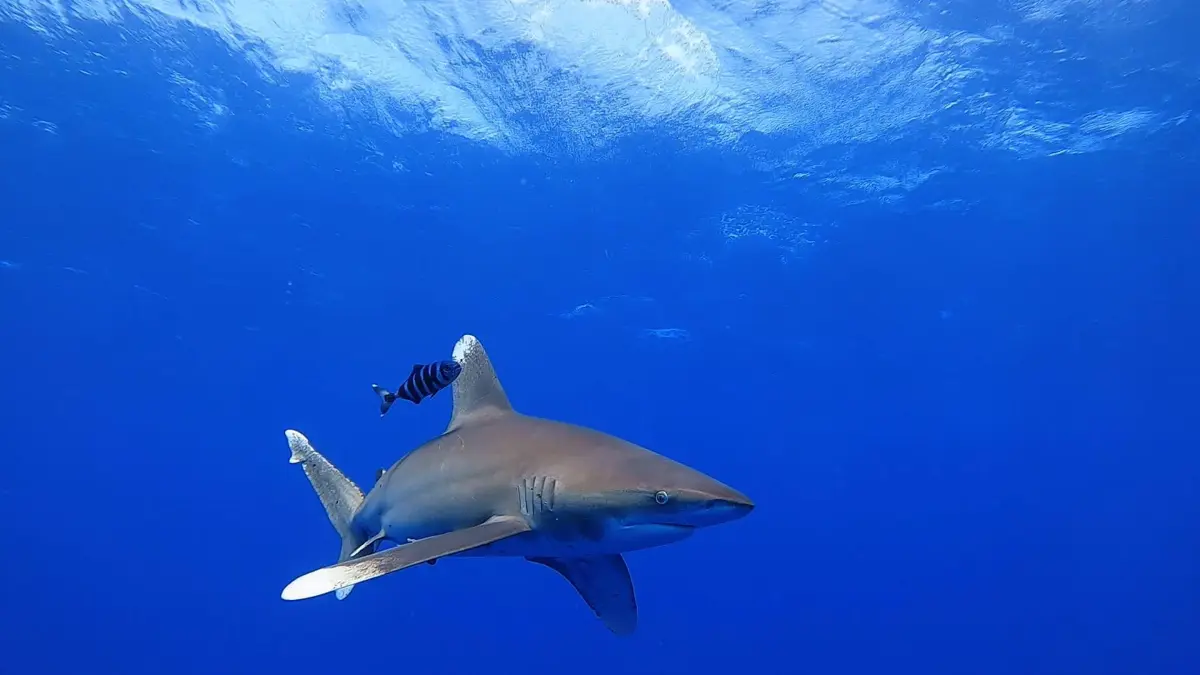
Gordon reef is most famous for the wreck of the “Loullia” which ran aground on the northern end of the reef in 1981. This dive can be done as either a drift or a mooring dive, mooring on the southern side of the reef. The dive can be done in many different ways. Suitable for all levels.
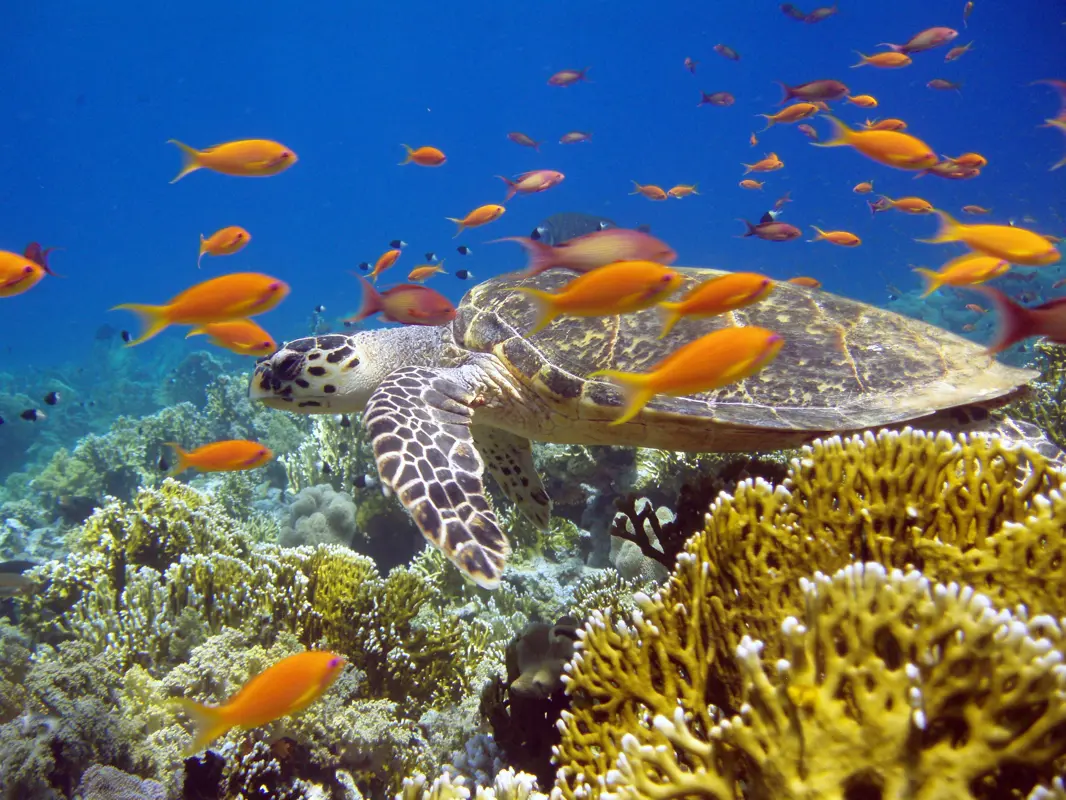
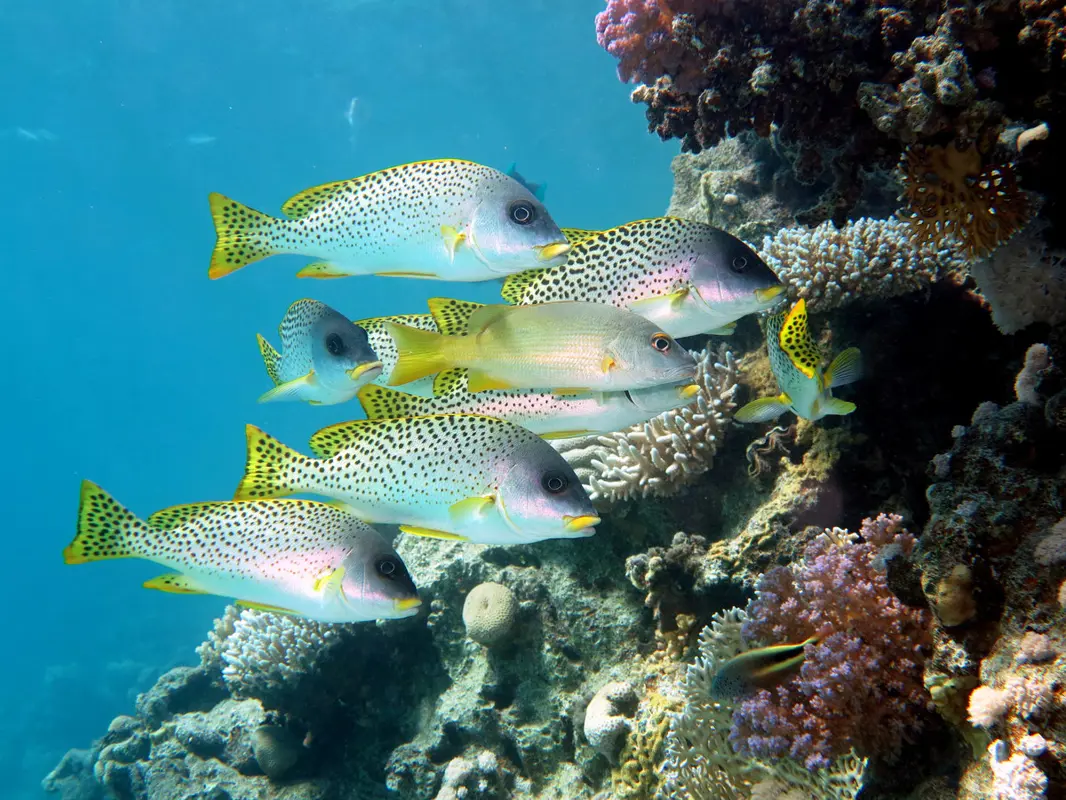
Kormoran/Zingara. in 1984 the ship that ran ground on the north side of laguna reef. in tiran strait in 10-12 meters underwater. the wreck is completely broken. Only accessible in very good weather. Known for the beautiful coral reef with soft and hard coral reef. There’s schools of goat fish with yellow fins between the hard coral hills which give the whole picture a magical atmosphere.
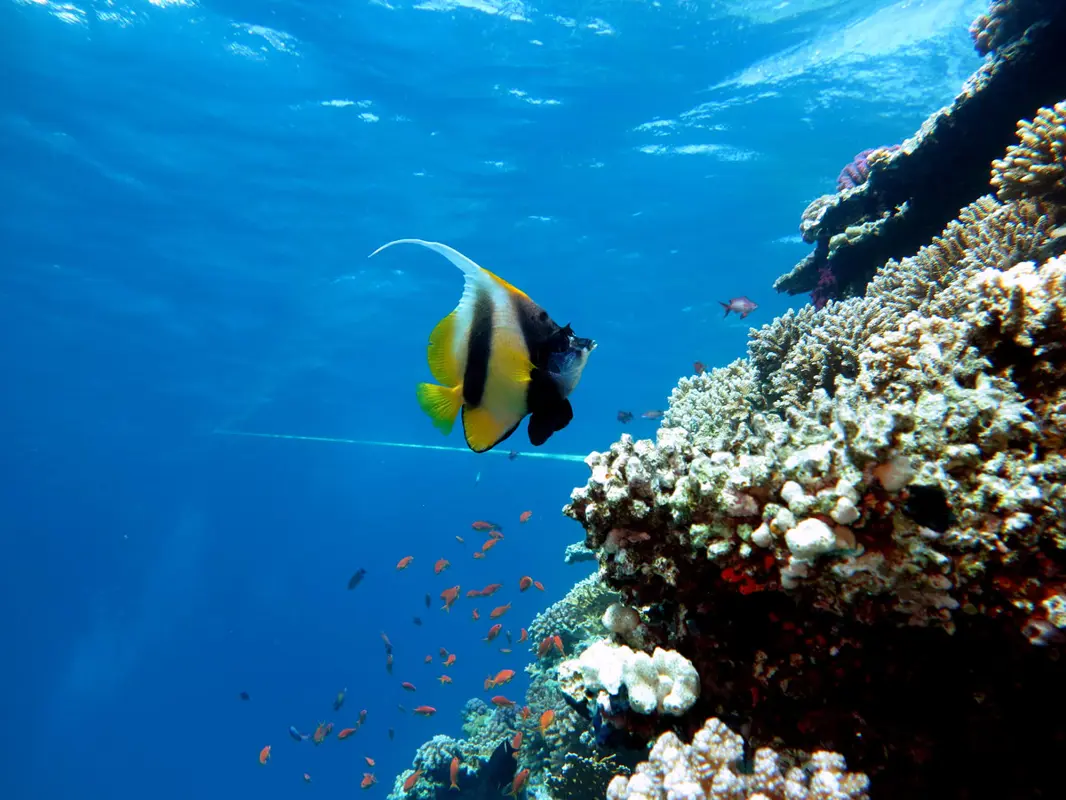
In Ras Ghamila you can find big table corals, gorgonians, and pinnacles all over a sandy bottom. This dive site is suitable for any level of diver and snorkelers.
Wonderful underwater garden with hard and soft corals, many different kind of rays, and stone and scorpionfish. Here you can also find long-nose hawkfish bidding in the gorgonians.
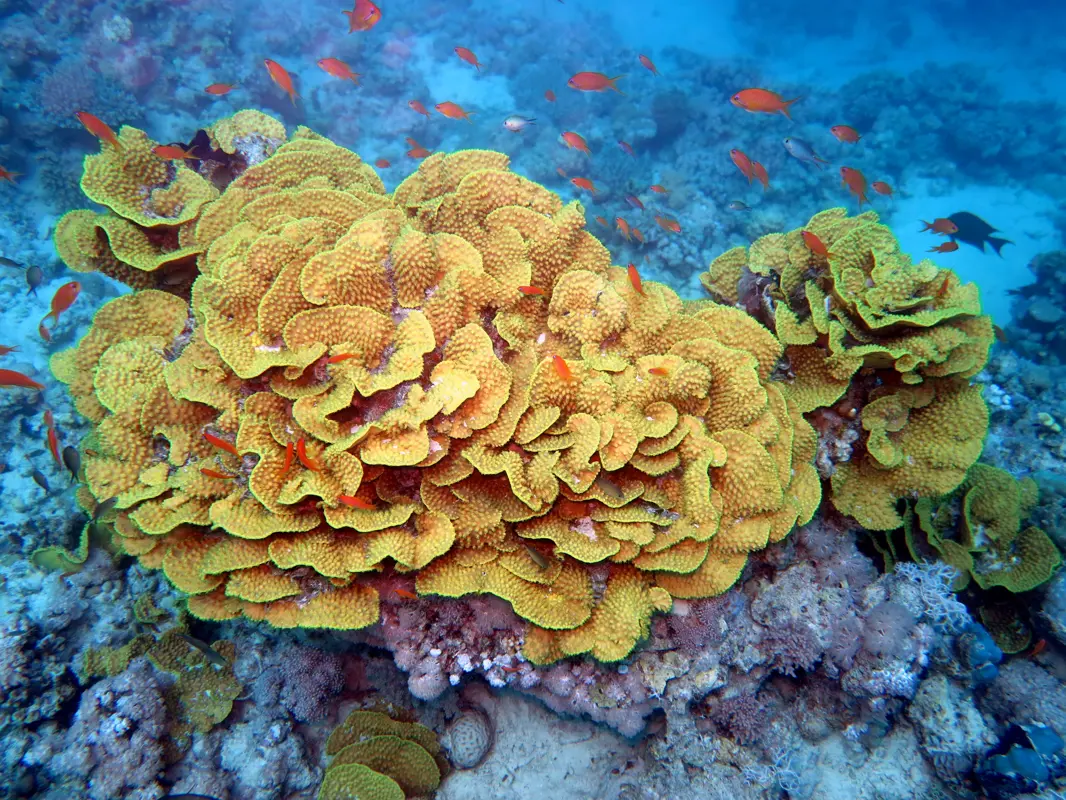
This dive site is suitable for any kind of levels. It is a drift dive. You find sandy slopes, a drop-off, pinnacles and small caves. Also very lovely for snorkeling! Here you have an incredible diversity of corals and fishes to find. Starting with porites you can drift over an area with red anemones followed by table corals and pinnacles.
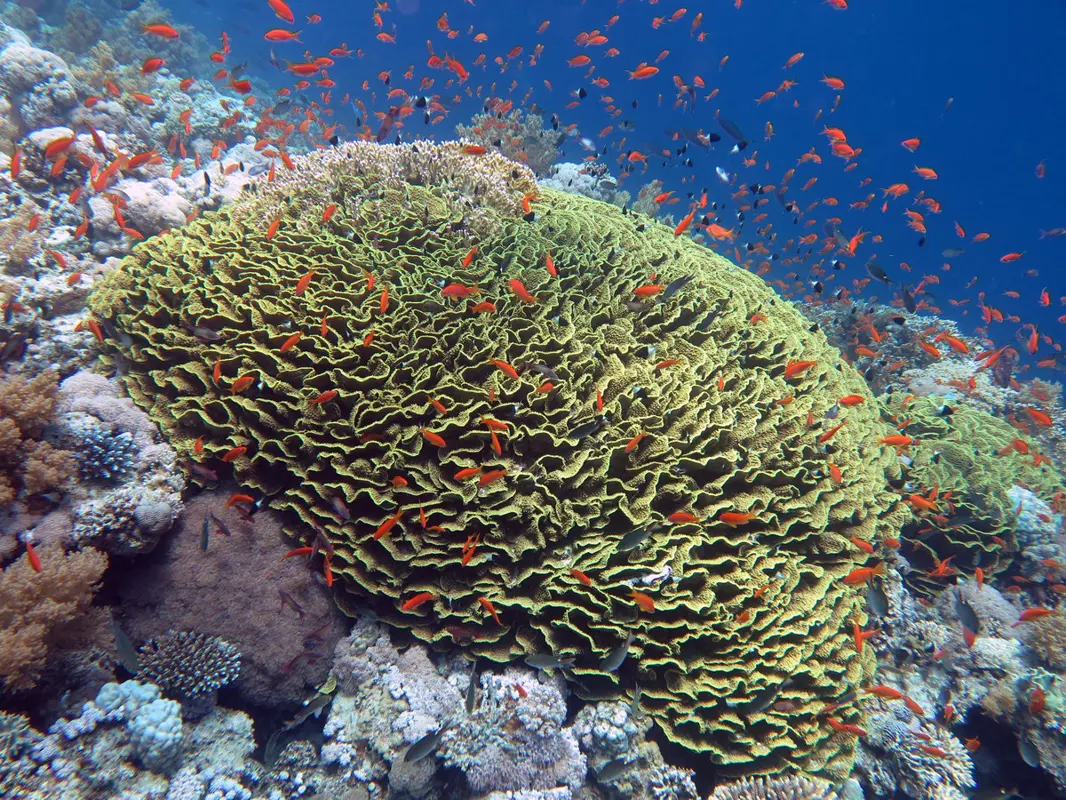
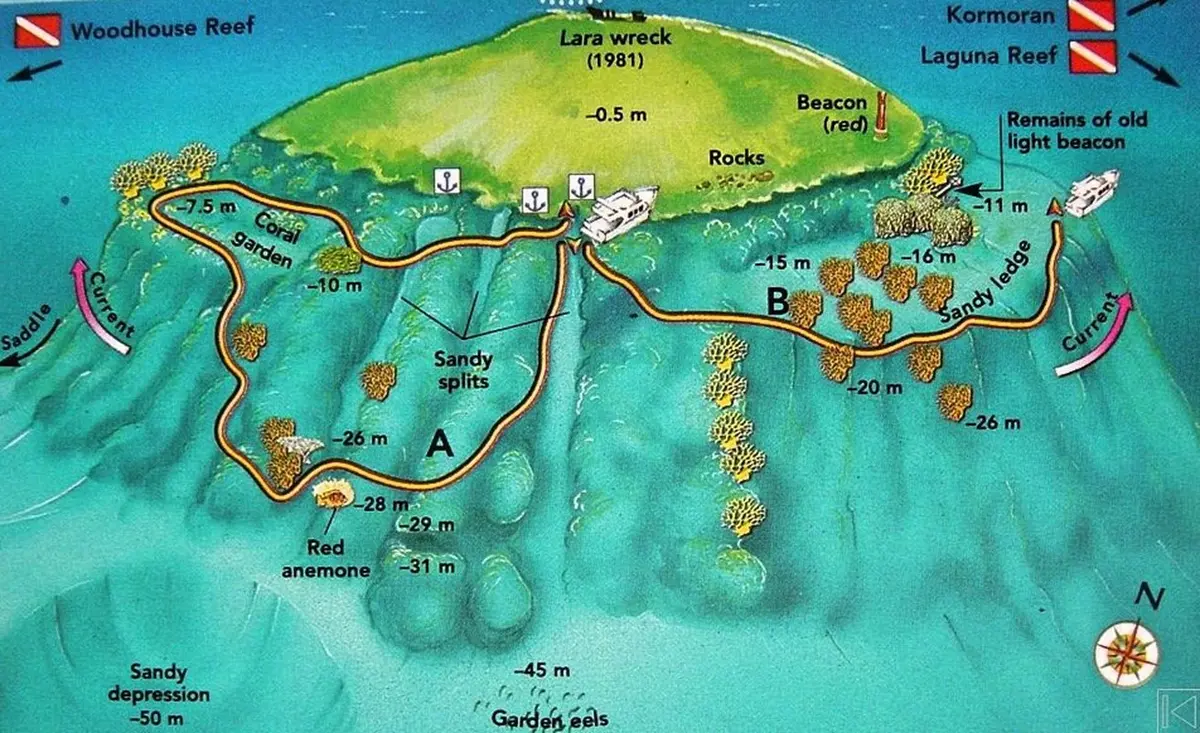
One of the best dive sites in the world. Can be done as a drift or mooring dive. Wonderful coral garden with soft and hard corals. Sometimes challenging currents on the “corners“. Backside of the reef known for hammerhead sharks in July to October.
All kinds of marine life can be found in Jackson Reef. Turtles, rays, sharks, morey eals, manta, jackfish, tuna aso.
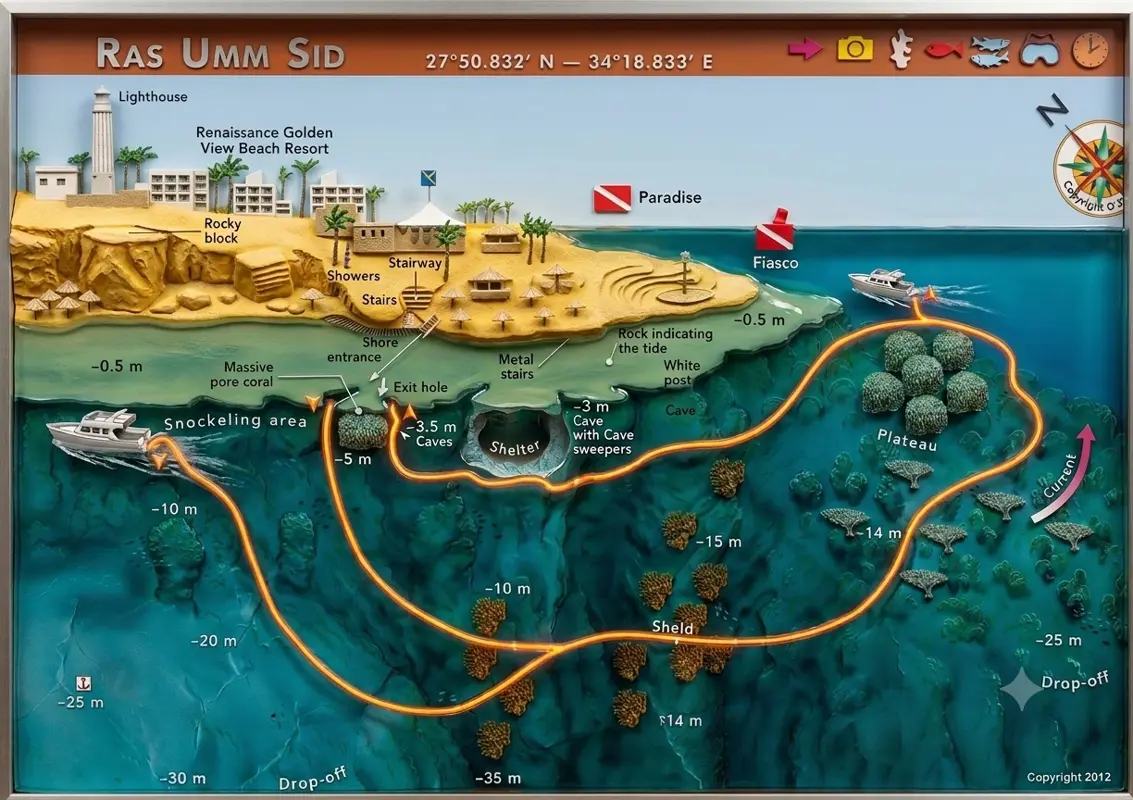
This site is suitable for every level. You can dive here from the shore and by boat. This site has an easy entry going down to a drop-off, followed by a wall with huge gorgonians and a coral plateau. Amazing huge gorgonians swaying in the current with hawk fish hiding inside. Along the wall you can find cleaning stations, giant morays eels, manta rays, eagle rays, and napoleons.
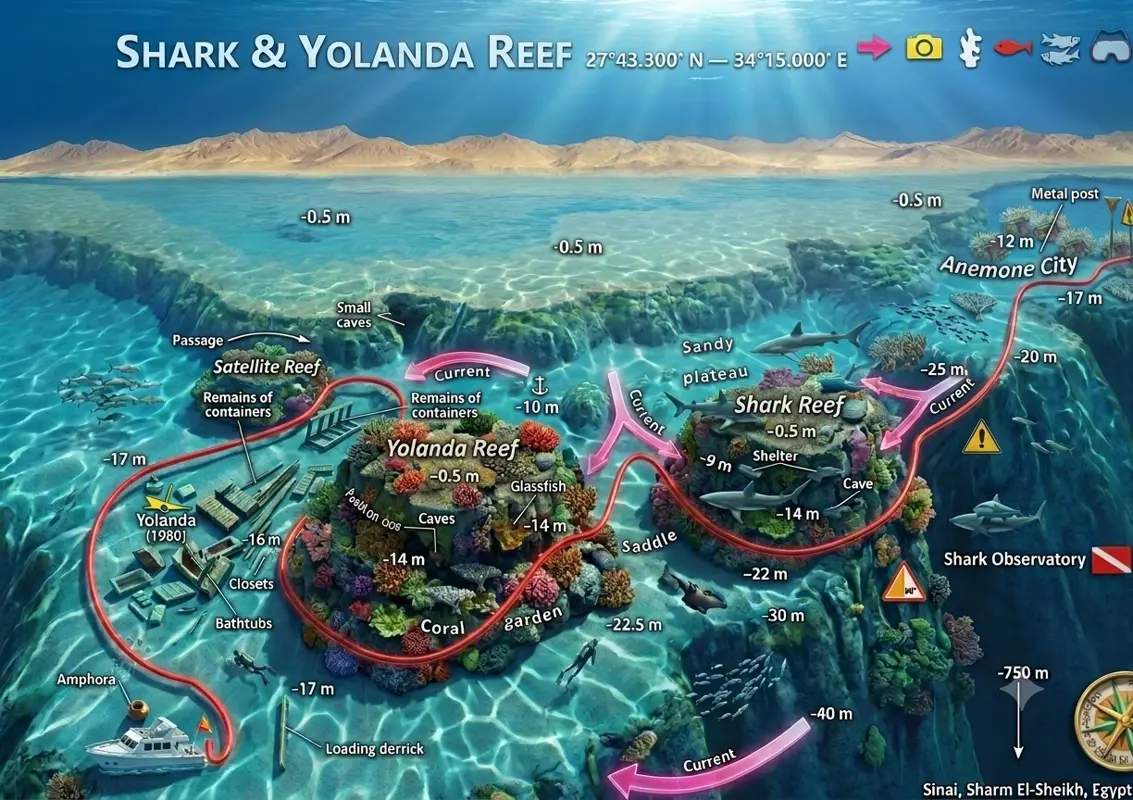
This is the most famous dive site around Sharm el Sheikh and is suitable for every level of diver as there are many possibilities to dive on these reefs. Shark Reef, Yolanda Reef, and Satellite Reef make up the 3 pinnacles here. Outside the reefs you can find big schools of batfish, barracudas, snappers, jacks, and much more. Inside the reef you can find cleaning stations and many rays and turtles. Mentioned in the Top 10 dives sites of the World
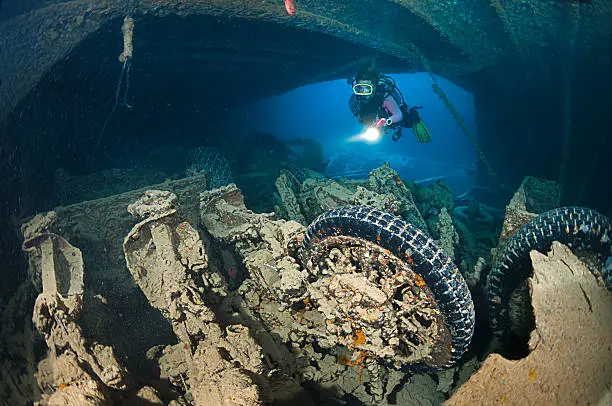
The Thistlegorm is the wreck of a British freighter, and one of the most famous wrecks in the world. It lies some 40 kilometers west of Sharm El Sheikh. The wreck lies on a flat keel at 30 m depth. The bridge rises up to 17 m. Magnificent anti-aircraft guns and general deck areas with their trains, tenders and winches. Inside the wreck you find cargo of military equipment packed and plenty of fishes.
Normally dived from the boat, Temple gets its name from the topography of the site which loosely resembles an underwater temple. This ’temple’ is easily dived, starting from the shallows of around 6m, until you make your way through a tiny swim through out in to the blue at which point you’re able to reach 30m+. Here you’ll see octopus hidden among the reef cracks, nudibranch, and scorpion fish. You also have a great chance to spot moray eels, along with large Napoleon wrasse, and turtles.
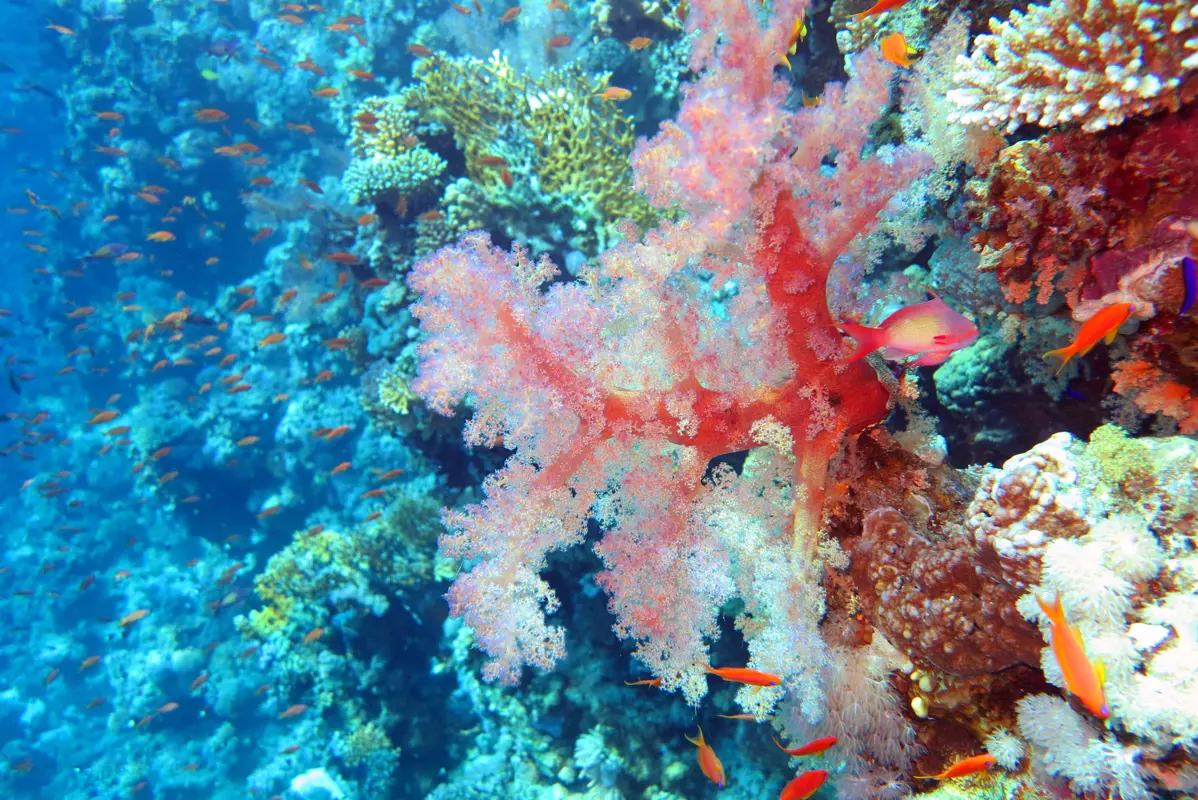
Thomas is the smallest of the reefs in the Strait of Tiran, but at the same time the most diverse. From steep faces to canyons and plateaus, you will find everything. Red Sea fish are abundant here. Also, often sharks can be seen at this site. Schools of tuna and snappers can be found here, especially in summer.
Tower is a spectacular dive site characterised by a deep canyon whose walls descend vertically for over 120m. It is a lovely drift dive with a strikingly beautiful underwater landscape. It is rich in reef fauna with many parrotfish, moray eels, marauding trevallies, and look carefully for the cube boxfish.
This wreck sunk at the Gubal Island and lays on its left side. The bow is about 5m and the stern in 27m deep. The wreck is full of glassfish and the mast is covered with beautiful soft coral. This wreck is easy to explore, however, strong currents can sometimes be expected. You will see glassfish, flutefish, lionfish, scorpion fish, stone fish, moray eels, puffer fish, box fish, nudibranchs, and stingrays.
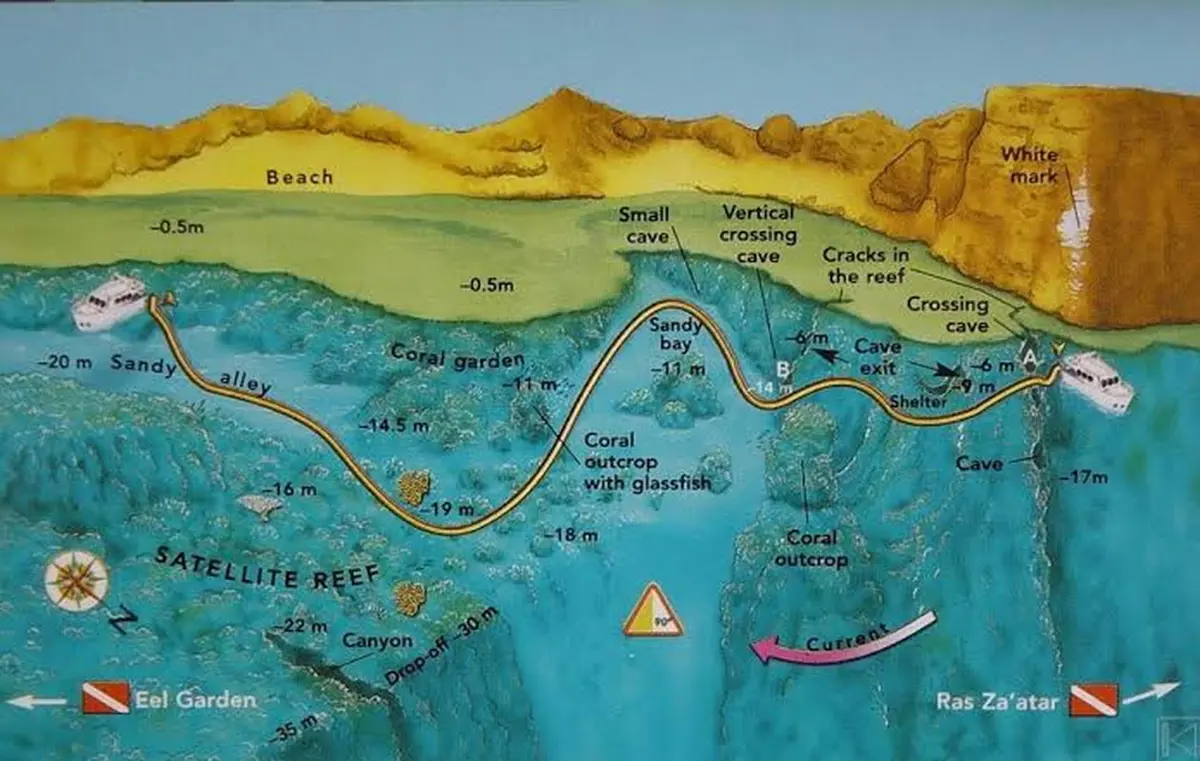
This dive site is perfect for all diving levels. This is a nice wall ending at a large pinnacle and going around the corner over a sandy bottom that ends up inside Marsa Barieka. Beautiful hard and soft coral, table coral, Malabar grouper, shrimp, wrasse, schooling barracuda, jacks, and eagle rays.
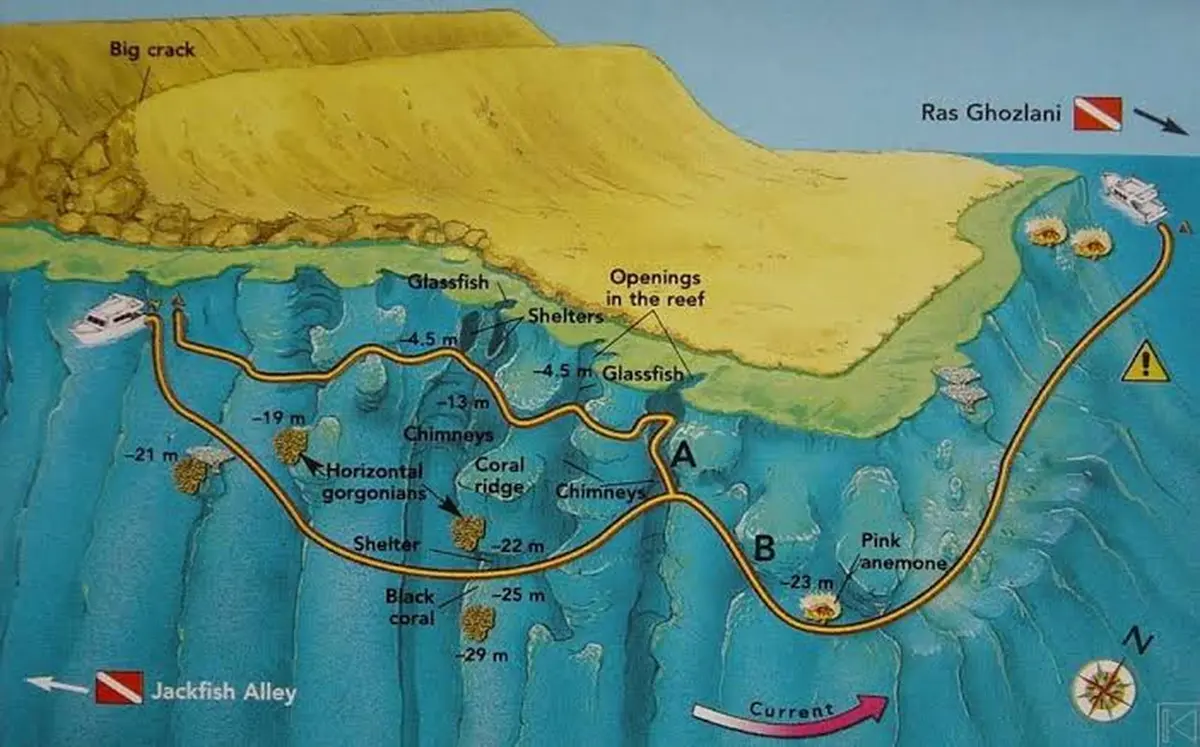
Jackfish Alley is one of the most exciting dive sites in Ras Mohammed.
It offers divers three highlights: a wall, a coral garden and a satellite reef.
The sheer wall is very porous with lots of small crevices. It has a couple of penetrable caves, each with separate entrances and exits. The wall becomes a sandy plateau where divers may find Blue Spotted Sting Rays, Feather Tail Rays and Eagle Rays. The coral garden ranges from 10 to 18m ending in the satellite reef. This reef, 50m away from the main reef, consists of small pinnacles covered with soft corals and Gorgonian Fans. For the more adventurous, the drop off on the edge of the satellite reef usually presents stronger currents bringing big creatures to feed.
This wreck of a British Steamer is on the Southern edge of Sha’ab Mahmoud which is also known as Beacon Rock as the wreck is directly below the South Cardinal Beacon. It is about another hour boat ride past Ras Mohammed and is prone to the weather conditions. Once at the reef there is some protection from the waves but it can still be a little rough. The Dunraven was built in 1873 in Newcastle and hit the reef in 1876. It has sunk in 30m of water right next to the reef wall and is completely upside down in two sections. The length is about 80m and it’s about 10m wide. The stern section is in about 29m to the sand and is open in places for those qualified to enter. This leads to a swim through by the side of the ship’s boiler and out where the wreck has broken in half. The exit being usually filled with glass fish in their thousands. The bow section is in shallower water with loads of places to stick your head into, but nowhere to get in. After the bow section the dive is usually done by fining over the hull which is covered in coral and then moving onto the reef wall and the shallows to finish the dive.
_lg.webp)
This is the longest reef of the four in the Straits of Tiran and is dived as a drift dive usually from South to North. Jumping at the southern part of the reef is a wall to about 30m. It is worth looking on to the sand patches below to try and spot sleeping sharks. The coral covers all the way from the surface down the wall which becomes more of a slope as the dive progresses. Half way through the dive there is a canyon going along the reef at about 25m which spreads out into a coral garden with sand alleys. This is usually where the current starts to pick up. If the conditions on the west side of the reef are rough the dive has to be ended at the end of the coral garden, which is usually reached after about 50 minutes. If weather conditions allow it is sometimes possible to continue the dive beyond this point. Where the reef leaves the surface and funnels down towards Jackson Reef. This area is referred to as the washing machine due to the very strong currents going in all directions.